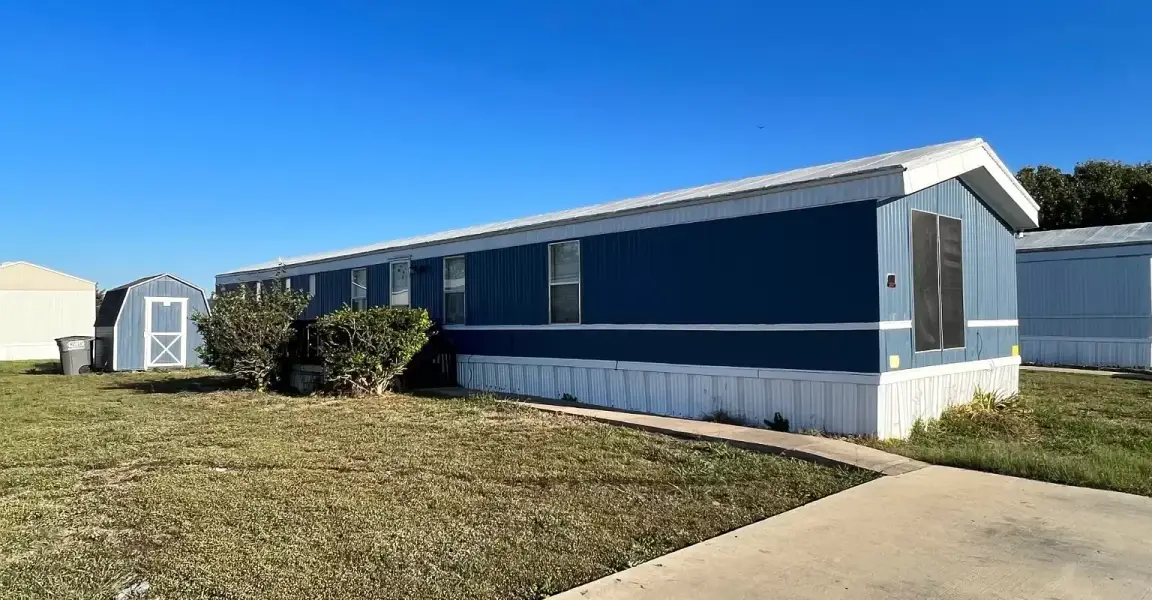

If your mobile home sits on land you own, you might assume you’re selling one thing: a house and a lot. In Texas, it isn’t always that simple. Depending on how your home is recorded with the state, you may legally be selling one piece of real estate or two separate assets, each with its own paperwork. Knowing which situation you’re in before you find a buyer can save weeks of delay.
Two Ways Texas Classifies a Manufactured Home
Every manufactured home in Texas has a Statement of Ownership on file with the Texas Department of Housing and Community Affairs (TDHCA). That record shows, among other things, whether the owner has elected to treat the home as personal property or real property.
- Personal property. The home is treated much like a vehicle. It is owned separately from the land, has its own tax account, and changes hands through a new Statement of Ownership rather than a deed.
- Real property. The home is legally part of the land. It is sold with the land by deed, typically through a title company, just like a site-built house.
Plenty of owners have lived on their own land for years without realizing their home is still recorded as personal property. Buying the land and setting a home on it doesn’t change the classification automatically.
How to Check Your Home’s Status
You can look up your home in TDHCA’s online manufactured home ownership records using the label number, serial number, or owner name. The record will show the election on file, the owner of record, and any liens. If the home shows as real property, there should also be a certified copy of the Statement of Ownership filed in your county’s real property records.
While you’re at it, compare the names. The names on the land deed and the names on the Statement of Ownership should match. When they don’t, for example because a parent’s name is still on one of them, that needs to be fixed before or during the sale.
If Your Home Is Real Property
This is the simpler case. You’re selling real estate. The home and land transfer together by deed, a title company usually handles the closing, and there is generally one property tax account that covers both. Buyers also have more financing choices, because many mortgage programs require a manufactured home to be classified as real property and attached to land.
The trade-off is that a traditional sale with a financed buyer comes with appraisals, inspections, lender requirements about the foundation, and a longer closing timeline.
If Your Home Is Personal Property
Here you’re really completing two transfers at once:
- The land transfers by deed, recorded with the county.
- The home transfers through an application to TDHCA for a new Statement of Ownership in the buyer’s name.
There are usually two tax accounts as well, one for the land and one for the home, and both need to be current. Liens work differently too: a loan against the home is recorded with TDHCA, while a loan against the land is recorded with the county. A buyer or title company will check both places.
None of this prevents a sale. It just means more moving parts, and it limits buyers who need a traditional mortgage. Cash buyers and buyers using personal property loans can purchase the home as it is. Our guide to the Texas Statement of Ownership explains the home side of the transfer step by step.
Should You Convert to Real Property Before Selling?
Texas lets an owner elect real property status when the home is attached to land the owner owns, or land held under a qualifying long-term lease. In general, the owner applies to TDHCA for a Statement of Ownership showing the real property election, files a certified copy in the county real property records, and notifies TDHCA and the county appraisal district that it has been filed. The filing and notice are due within 60 days of the statement being issued. Any existing lien on the home has to be addressed as part of the process.
Whether it’s worth doing before you sell depends on your buyer:
- It may be worth it if your home is newer, in good shape, and likely to appeal to buyers using a mortgage. Their lender will probably require it anyway.
- It probably isn’t necessary if you’re selling to a cash buyer, the home is older, or you need to sell quickly. Converting takes time and adds steps that a cash buyer doesn’t need.
If you’re unsure, ask a title company or real estate attorney before starting the process.
Your Selling Options
- Sell the home and land together. This is what most owners want and usually brings the most total value.
- Sell the home and keep the land. If the home is personal property, it can be sold on its own and moved by the buyer, leaving you with the lot. See how to sell a mobile home without land in Texas and our breakdown of what it costs to move a mobile home.
- Sell the land and deal with the home separately. Some land buyers don’t want an older home. In that case the home may be sold to someone who will move it.
Common Problems That Slow These Sales Down
- The Statement of Ownership is still in a previous owner’s name because the transfer was never filed
- An old loan was paid off years ago but the lien was never released
- Taxes are current on the land but delinquent on the home, or the other way around
- The owner on record has passed away and the estate was never settled
- The home was moved onto the land and the state’s records still show the old location
Each of these can be fixed, but they’re much easier to handle when they’re found at the start instead of a few days before closing.
How Mobile Home Offers Can Help
We buy mobile homes across Texas, both in parks and on private land. If you’re not sure how your home is classified or what it would take to sell, we can help you sort that out on a short 5-10 minute call. From there we’ll make a fair, no-pressure cash offer and help with the ownership paperwork. We buy as-is and charge no commissions or fees.
This article is general information and not legal advice. For questions about your specific property, talk to a title company or attorney.
Have a mobile home on land you’re thinking about selling? Call or text us at (469) 795-1227.